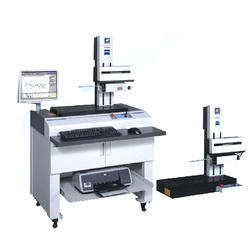
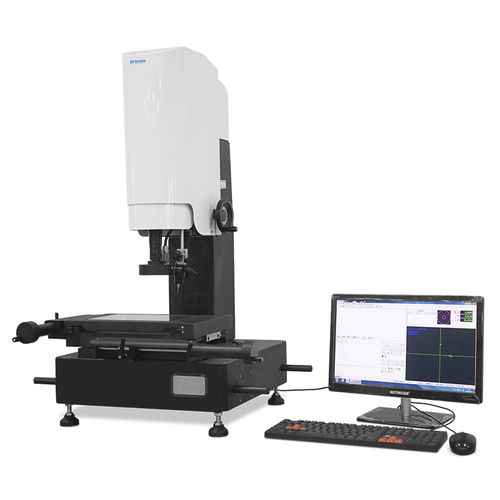
A roundness measuring tester is a precision inspection instrument used to evaluate how closely a circular component conforms to a true round shape. It plays a critical role in identifying form errors such as ovality, eccentricity, and waviness in cylindrical parts.
In modern industrial quality control, maintaining dimensional accuracy is essential for performance, safety, and durability. A reliable roundness tester ensures components meet strict tolerance requirements, helping manufacturers reduce rejection rates, improve product consistency, and comply with international quality standards.
Wholesale buyers typically include manufacturing companies, industrial distributors, quality inspection labs, and OEM suppliers who require roundness measuring testers in bulk for multi-location operations or resale.
These testers are widely demanded across industries such as automotive manufacturing, precision machining, bearing production, and aerospace engineering, where even minor geometric deviations can lead to performance failure. For wholesale procurement, buyers prioritize durability, repeatability, ease of calibration, and long-term technical support.
| Feature | Manual Tester | Digital Tester | CNC / Automatic Tester |
|---|---|---|---|
| Typical Use | Basic inspection, small workshops | Routine quality control | High-volume production |
| Measurement Accuracy | Low to Moderate | High | Very High |
| Resolution | Manual Scale | Digital Readout | Digital + Software |
| Automation Level | Manual | Semi-Automatic | Fully Automatic |
| Software & Data Output | None | Basic USB/Print | Advanced SPC/Network |
| Typical Price Tier | Low | Mid | High |
| Best For | Entry-level inspectors | Shop floor QC teams | Industrial & precision labs |
Manual roundness measuring testers are cost-effective solutions for basic inspection tasks. They are commonly used in small workshops and training facilities where measurements are taken occasionally and budget sensitivity is high.
Digital roundness testers offer higher accuracy with digital displays and data storage features. These models are suitable for medium-scale industries looking for reliable, repeatable results with minimal operator dependency.
CNC and automatic roundness measuring testers are designed for high-volume production environments. Equipped with advanced software and automation, they provide fast inspection cycles, detailed graphical analysis, and seamless integration with quality management systems.
When sourcing a roundness measuring tester wholesale, understanding technical specifications is crucial to ensure suitability across applications.
Choosing the right specifications not only improves inspection efficiency but also ensures long-term reliability and scalability for growing industrial operations.
A roundness measuring tester is widely used across manufacturing and inspection environments where dimensional precision directly impacts product performance and lifecycle. These instruments support consistent quality checks from raw machining stages to final inspection.
In shaft and bearing manufacturing, roundness testing is critical to ensure smooth rotation, reduced friction, and extended service life. Even slight deviations in roundness can lead to vibration, noise, or premature failure, making roundness testers essential inspection tools.
Cylindrical components such as rollers, bushings, sleeves, and pipes require accurate form measurement to meet assembly and performance requirements. A roundness measuring tester helps manufacturers maintain tight tolerances and ensure interchangeability in mass production.
Precision engineering units and tool rooms rely on roundness testers for prototype development, die and mold inspection, and high-accuracy machining validation. These environments demand repeatable results and reliable data for continuous process improvement.
The wholesale price of roundness measuring testers varies depending on configuration, performance level, and intended industrial application. Bulk buyers often benefit from volume discounts and customized supply agreements.
Entry-level manual roundness testers are generally available at lower wholesale price points, while digital and automatic systems fall into mid to high price ranges. Advanced CNC roundness measuring testers with software integration command premium pricing due to their automation and analytical capabilities.
Selecting the right supplier is as important as choosing the right equipment, especially for wholesale and long-term procurement. A dependable supplier ensures consistent quality, technical support, and timely delivery.
Buying directly from a roundness measuring tester manufacturer often provides better customization, competitive pricing, and direct technical expertise. Distributors, on the other hand, may offer faster availability and multi-brand comparison options.
Reliable after-sales support, including installation assistance, operator training, and periodic calibration services, is essential for maintaining measurement accuracy. Wholesale buyers should prioritize suppliers with strong service networks and documented calibration standards.
For distributors and resellers, OEM and private-label roundness measuring testers offer branding flexibility and market differentiation. These options allow wholesale buyers to expand product portfolios while maintaining consistent quality and technical specifications.
Compliance with recognized quality standards is a key requirement when sourcing a roundness measuring tester for industrial and wholesale applications. These standards ensure accuracy, repeatability, and global acceptance of inspection results.
Most industrial roundness measuring testers are designed in accordance with ISO standards related to geometrical product specifications. Adherence to international testing standards allows manufacturers and inspection units to maintain consistency across global supply chains and audits.
Calibration is essential to ensure measurement reliability over long-term usage. For bulk procurement, pre-calibrated roundness testers with traceable calibration certificates help reduce setup time and ensure uniform accuracy across multiple production lines.
Purchasing roundness measuring testers in bulk offers both financial and operational advantages, especially for large manufacturing units and distributors.
Bulk buying significantly lowers per-unit cost, enabling manufacturers and resellers to achieve better profit margins. Wholesale pricing structures also allow for long-term cost predictability in capital equipment planning.
Using identical roundness measuring testers across facilities ensures uniform inspection standards. This consistency reduces variation in measurement results and supports centralized quality control management.
Wholesale orders are often prioritized by manufacturers, resulting in faster delivery timelines for large-scale projects. This helps industrial buyers meet tight commissioning and production schedules without delays.
The demand for roundness measuring testers continues to grow alongside advancements in precision manufacturing and automation. Industries are increasingly investing in high-accuracy inspection systems to maintain competitive quality standards.
For wholesalers, exporters, and industrial distributors, investing in roundness measuring testers presents a strong business opportunity. With rising global demand, repeat purchase cycles, and the need for reliable after-sales support, this product category offers long-term growth and sustainable returns.